Halal certification rules by country
Compare certification, alcohol, slaughter, personnel and recognition requirements, then read the country guide and its official sources. This first edition covers 16 countries, not every jurisdiction.
Compare countries · Understand BPJPH, GAC, GSO, SMIIC and recognition
Evidence-led guidance for standards users
USDHS Guidance explains practical questions about country certification rules, halal standards, certification, accreditation, audit preparation, training, ingredients, facility controls and public accountability. Applicable destination-country law and the chosen certification scheme remain controlling.
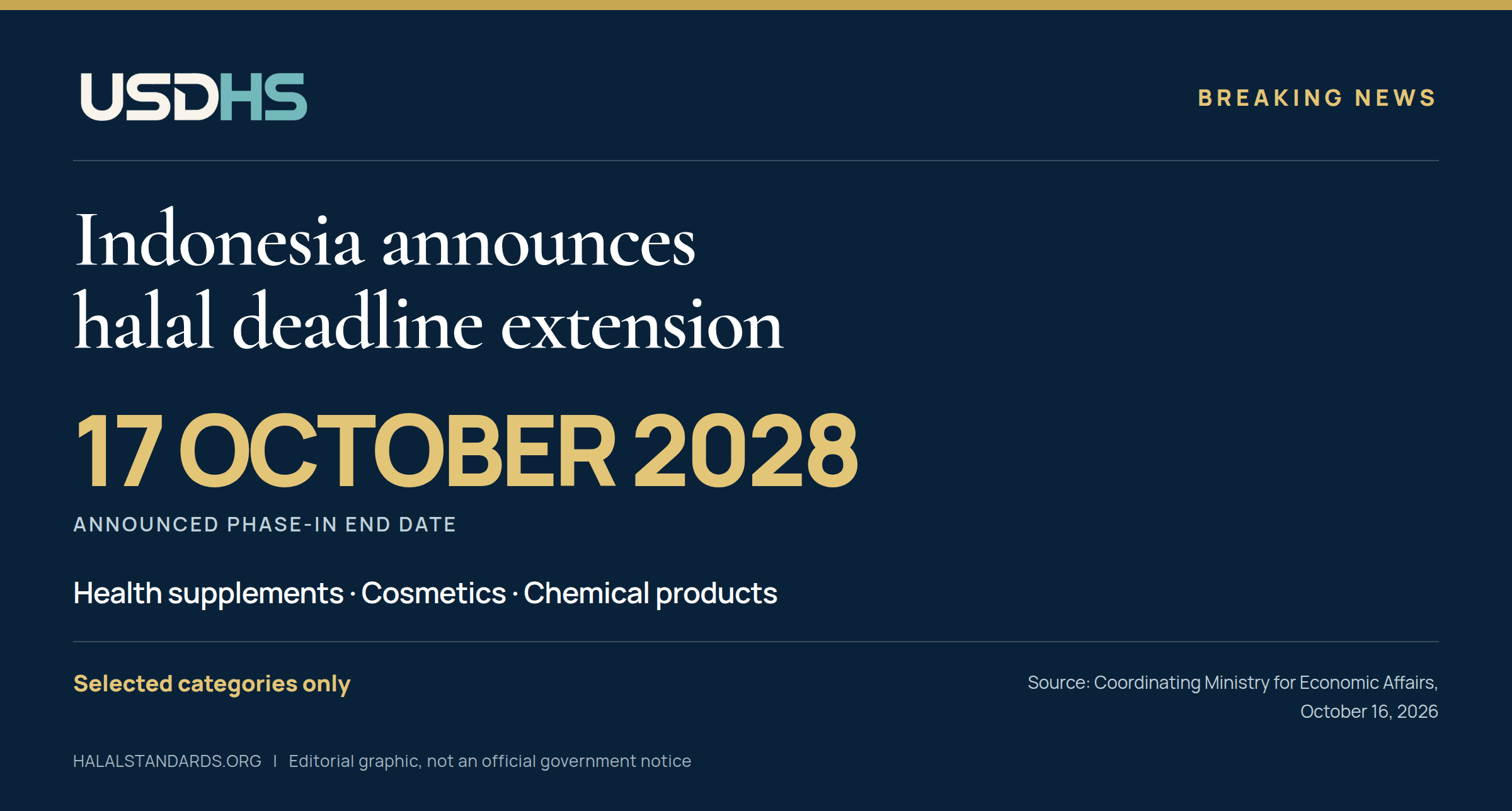 Breaking: Indonesia Announces Selected Halal Certification Deadline Extensions to October 2028
Indonesia has announced a two-year extension for selected mandatory halal certification deadlines, including health supplements, cosmetics and chemical products. Here is what manufacturers and exporters need to know.
 A Halal Certificate Does Not Certify the Whole Restaurant
A certificate on the wall may belong to a meat supplier rather than the restaurant. Learn how to check the business name, certifier, dates, facility, and products actually covered.
 How USDHS Calculates a Halal Certification Body Credibility Score
See how comprehensive accreditation establishes competence, how every qualifying authority contributes proportionally against the national benchmark, and how public accountability remains separate.
 2026 U.S. Halal Certification Bodies Ranked by Credibility Score
Compare all 27 U.S. halal certification bodies under the accreditation-dominant Model B methodology with proportional current-accreditor breadth.
 American Halal Foundation Comprehensive Accountability Assessment: 96% Credibility Score, Grade A
American Halal Foundation is a strong option to consider where its documented scope fits the product and market: this review gives it a 96% score and Grade A.
 Halal Watch World Comprehensive Accountability Assessment: 96% Credibility Score, Grade A
Practical verdict: the available record offers strong support for relying on Halal Watch World LLC within the documented category K scope, although some public details remain incomplete.
 IFANCA Comprehensive Accountability Assessment: 96% Credibility Score, Grade A
Practical verdict: the available record provides strong grounds to rely on IFANCA within the scopes covered by its current accreditations, reflected in its 96% Credibility Score (Grade A).
 Islamic Services of America (ISA) Comprehensive Accountability Assessment: 95% Credibility Score, Grade A
Practical verdict: ISA, Inc., operating as Islamic Services of America, has a strongly substantiated record for a user deciding whether to rely on its certification, although key public disclosures remain incomplete.
 ISWA Halal Certification Department Comprehensive Accountability Assessment: 94% Credibility Score, Grade A
Practical verdict: the record gives a strong basis to consider ISWA Halal Certification Department’s organizational controls, but a buyer should still confirm the certificate and scope.
 Halal Transactions of Omaha Comprehensive Accountability Assessment: 94% Credibility Score, Grade A
The practical verdict is that this review provides a strong basis for relying on Halal Transactions of Omaha within the scope covered by its current accreditation: it scored 94% (Grade A).
 Halalco Inc. Comprehensive Accountability Assessment: 93% Credibility Score, Grade A
For someone deciding whether to rely on this certifier, the record is strongly supported, with a 93% score and Grade A. The review records current accreditation by EIAC, an independent accreditor that has vetted Halalco Inc.
 RACS USA Comprehensive Accountability Assessment: 20% Credibility Score, Grade F
The practical result is that this review does not provide enough verified support to rely on this certifier’s score alone: it received 20%, Grade F.
 Halal Food Standards Alliance of America Comprehensive Accountability Assessment: 55% Credibility Score, Grade F
Practical verdict: do not rely on this certifier without seeking additional, independently verifiable information. The review confirms an active California nonprofit, public leadership information, named halal positions, and a directory for certified entities.
 Majlis Ash-Shura of Metropolitan New York Comprehensive Accountability Assessment: 22% Credibility Score, Grade F
Practical verdict: a prospective user should seek additional verifiable information before relying on this certifier. The program has an established legal identity, dates to 1989, and publicly documented work with more than 40 schools and the NYC Department of Education.
 IS EG Halal Comprehensive Accountability Assessment: 37% Credibility Score, Grade F
The practical verdict is that the available record does not provide enough documented accountability for a reader to rely on IS EG Halal’s certification alone.
 Halal Conformity Center Comprehensive Accountability Assessment: 34% Credibility Score, Grade F
People deciding whether to rely on this certifier should not rely on this review score alone: HCC received a 34% Credibility Score, Grade F.
 Halal Monitoring Services Comprehensive Accountability Assessment: 10% Credibility Score, Grade F
Practical verdict: the available record is not strong enough for someone to rely on this certifier based on this review alone.
 Circle H International Comprehensive Accountability Assessment: 10% Credibility Score, Grade F
Do not rely on Circle H’s public claims alone without obtaining additional, file-level evidence. Circle H International receives a 10% Credibility Score, Grade F.
 Halal Food Council USA Comprehensive Accountability Assessment: 15% Credibility Score, Grade F
Practical verdict: the published record does not provide enough substantiated information to rely on Halal Food Council USA’s certification without seeking further evidence. It received a 15% Credibility Score, Grade F.
 U.S. Halal Consultants Comprehensive Accountability Assessment: 8% Credibility Score, Grade F
Based on the reviewed record, a buyer should seek further verifiable information before relying on this certifier. U.S. Halal Consultants received an 8% Credibility Score and Grade F.
 Al Nur Truly Halal Services Inc. (ANT8S) Comprehensive Accountability Assessment: 17% Credibility Score, Grade F
On the evidence reviewed, someone deciding whether to rely on ANT8S should seek additional verifiable documentation rather than rely on this assessment alone: it received a 17% Credibility Score, Grade F.
 Global Islamic Research Organization Comprehensive Accountability Assessment: 7% Credibility Score, Grade F
Before relying on Global Islamic Research Organization as a certifier, a decision-maker should seek additional independently verifiable information. This review gives it a 7% Credibility Score and Grade F.
 Ben Issa Halal Meat Solutions Comprehensive Accountability Assessment: 18% Credibility Score, Grade F
Practical verdict: the reviewed record does not provide enough independently verifiable information for a reader to rely on this certifier alone.
 Hijrah Ranch Halal Certification Comprehensive Accountability Assessment: 5% Credibility Score, Grade F
Practical verdict: the reviewed record does not provide enough publicly established evidence to rely on the Hijrah Ranch LLC Halal Certification program by itself.
 United Ulama Council of USA Comprehensive Accountability Assessment: 5% Credibility Score, Grade F
Use caution before relying on this certifier: the review gives United Ulama Council of USA Inc. a 5% score and Grade F because the public record supports current halal-licensing activity but leaves the approval system largely unexplained.
 Shariah Council USA Comprehensive Accountability Assessment: 1% Credibility Score, Grade F
The reviewed public record is not enough to rely on this certifier alone. It receives a 1% Credibility Score (Grade F). The strongest known facts are its public hand-slaughter requirement and stated verification process, including requirements about the cut, blood drainage, and slaughterer.
 The Halal Approval LLC Comprehensive Accountability Assessment: 92% Credibility Score, Grade A
Practical verdict: the review supports relying on The Halal Approval LLC within the scope its independent accreditor has vetted, while checking any needs that depend on public transparency beyond that scope.
 Etimad Halal Comprehensive Accountability Assessment: 31% Credibility Score, Grade F
Practical verdict: do not rely on the Etimad mark alone for high-risk purchasing decisions until the missing evidence is supplied. Etimad publicly performs certification activity, has certificates naming Jamal Saleem as Halal Administrator, and has been listed as a certifier in campus-related records.
 American Halal Institute Comprehensive Accountability Assessment: 3% Credibility Score, Grade F
On the available record, a buyer should seek further confirmation before relying on American Halal Institute’s certification. It receives a 3% Credibility Score and Grade F.
 Islamic Information Center of America Comprehensive Accountability Assessment: 13% Credibility Score, Grade F
Practical verdict: the reviewed record does not provide enough verified information for someone to rely on IICA’s halal certification program on this assessment alone.
 Islamic Halal Food Products, Inc. Comprehensive Accountability Assessment: 8% Credibility Score, Grade F
Practical verdict: the public record reviewed is not enough to rely on this certifier’s score alone. Islamic Halal Food Products, Inc. is a verified New York domestic business corporation, has an operating history reaching 1996, and offers halal certification for food and non-food products.
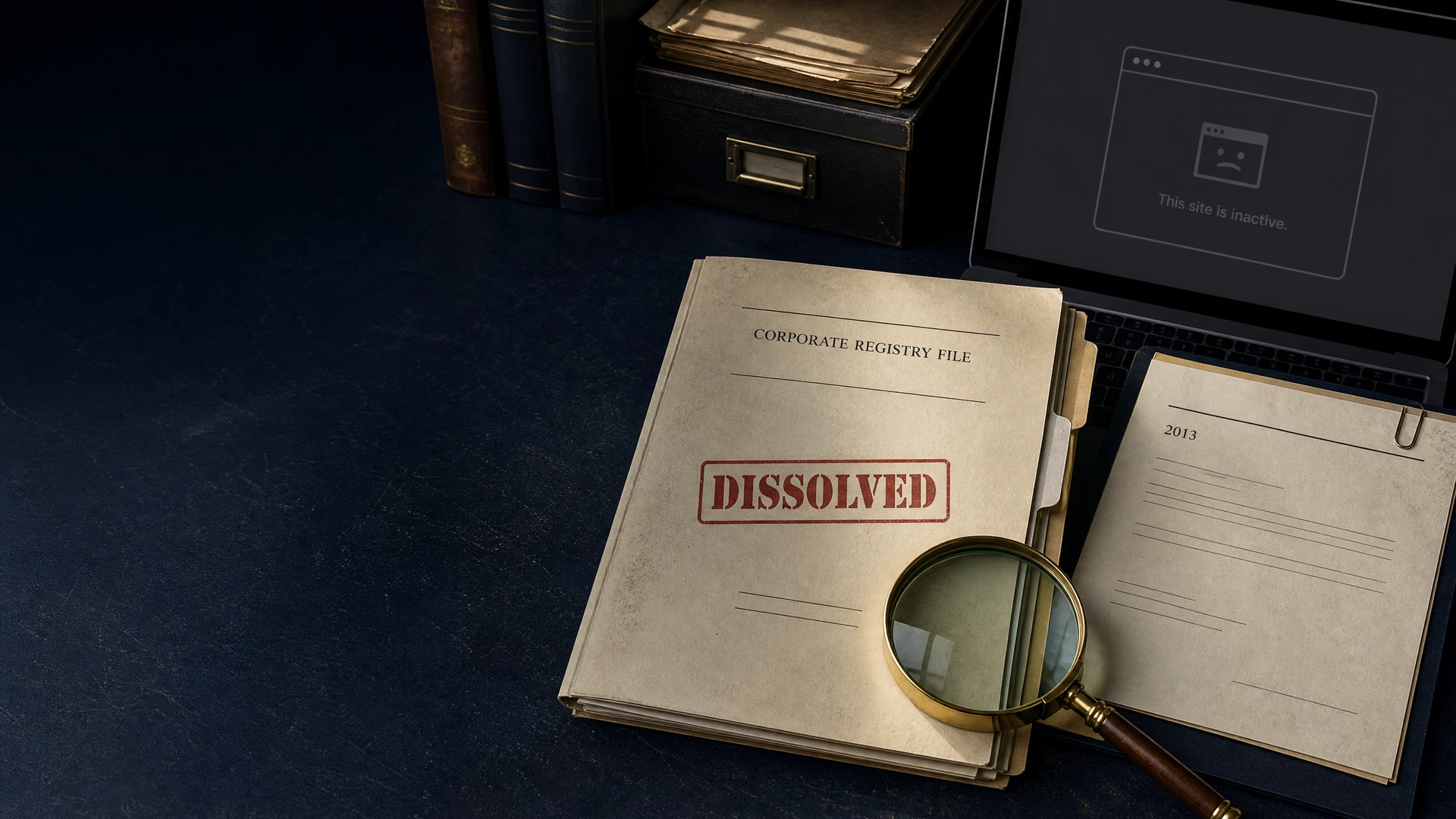 AAHC Is Still Being Promoted. Official Records List It as Dissolved.
Illinois and IRS records conflict with current pages presenting AAHC as an active nonprofit council. See what is confirmed, what remains unanswered, and how to verify a certifier's claimed affiliations.
 Who’s Behind that Halal Certificate?
A halal certificate asks Muslims to rely on the people and system behind it. USDHS explains why ownership, religious authority, competence, transparency, and accountability must be visible.
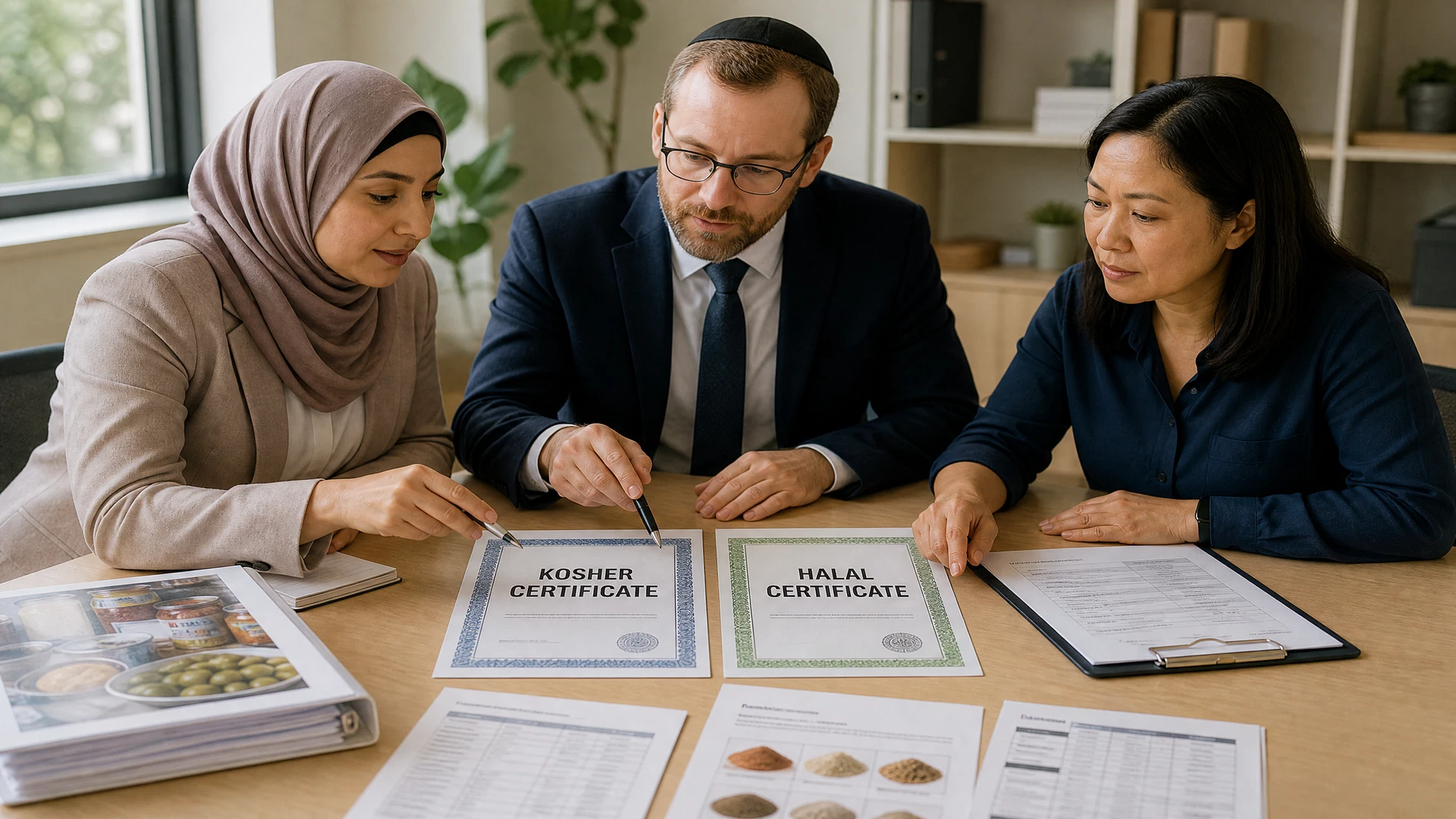 A Kosher Certificate Is Not a Halal Certificate
Kosher and halal share some concerns, but they are different religious systems. A kosher certificate or audit cannot authorize a halal certificate without complete halal-specific review.
 U.S. Halal Standards: A Practical HIPS Guide
Separate law, religious standards, certification, accreditation, and facility controls—then identify the HIPS publications your team needs.
 What Happens During a Halal Audit? A Preparation Guide for U.S. Facilities
A successful halal audit requires systematic preparation across operations and QA. Learn how to organize your facility and team for an assessment.
 Halal Manufacturing Audit Readiness: What QA Teams Should Organize
Preparing for a halal manufacturing audit requires organizing specific evidence categories. Discover how QA teams can streamline readiness before an audit.
 Halal Restaurant Audit Readiness: Records, Roles, and Customer Transparency
A successful halal restaurant audit requires organized ingredient records and clear kitchen controls. Discover how food-service managers can prepare effectively.
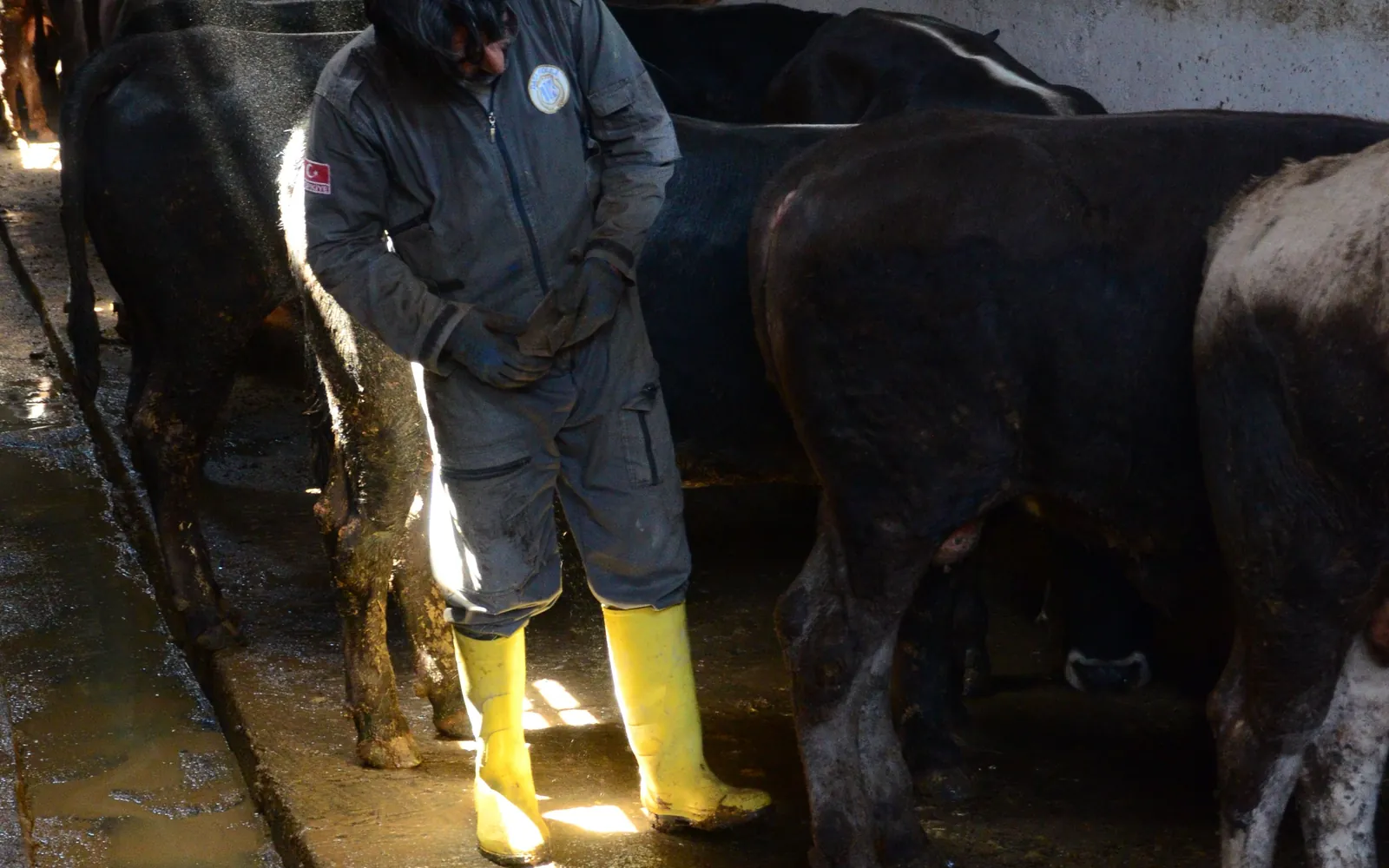 Halal Livestock Processing Audit Readiness: Roles, Records, and Facility Preparation
Preparing for a halal livestock processing audit requires careful organization of roles, records, and facility controls. Discover what QA teams need to know.
 Halal Kitchen and Catering Audit Preparation for Institutional Food Service
Institutional kitchens and catering services face unique challenges in maintaining halal integrity. This guide explains how to prepare your facility for a halal audit by focusing on documentation, ingredient verification, and cross-contamination prevention.
 Halal Logistics and Warehouse Readiness: Protecting Chain of Custody
Discover how QA and supply-chain teams protect halal integrity during transit and storage. This guide outlines key preparation steps for a logistics halal audit.
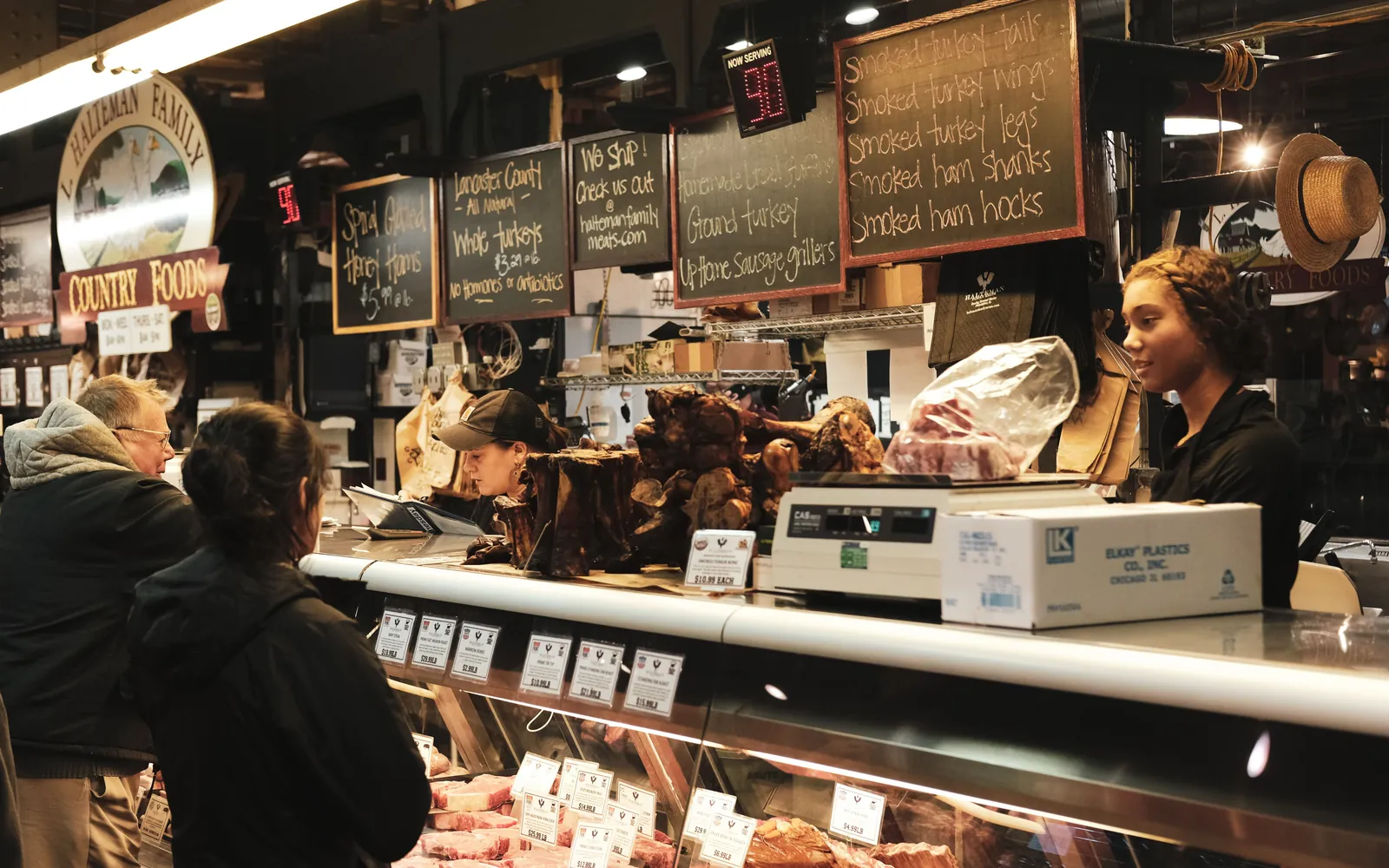 Halal Grocery and Butcher-Counter Audit Readiness
Discover essential preparation steps for grocery and butcher-counter halal audits. Ensure your facility is ready for certification by managing cross-contamination risks and organizing necessary records.
 Halal Certification Body Accreditation vs. Certification
Learn the difference between facility certification and certification body accreditation, what accreditation assesses, and why exact entity, scope, dates, and responsible decision roles still matter.
 Which Halal Standards Training Does Your Team Need?
Selecting the right halal training ensures your team is prepared for audits and maintains continuous compliance. Learn how to align training levels with organizational roles.
 Halal Ingredient Verification: Questions QA Teams Should Ask Suppliers
Establishing a rigorous halal ingredient verification process protects the integrity of your entire supply chain. Discover the critical questions U.S. quality-assurance teams must ask suppliers to prepare for a successful halal audit.
 Common Halal Audit Readiness Gaps and How QA Teams Can Respond
Discover the most frequent halal audit readiness gaps and how QA teams can resolve them. Learn to align your facility's documentation and training with halal standards.
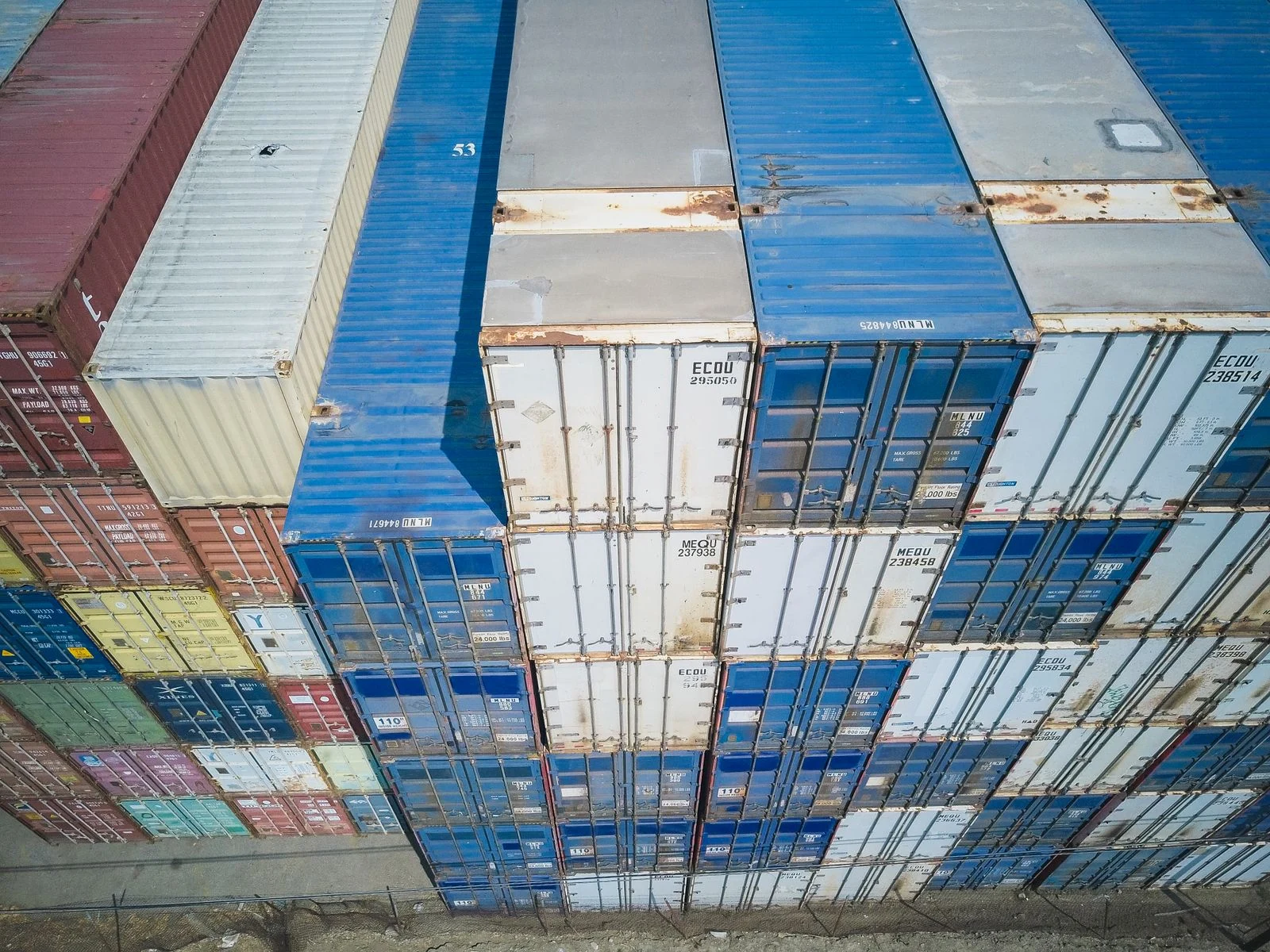 Halal Certification Standards Worldwide: A Practical 2026 Comparison
Halal certificates do not travel on logo alone. Compare the country rules, alcohol categories, slaughter conditions, decision roles, accreditation scope and destination recognition before applying or shipping.
 International Halal Standards, Accreditation and Recognition Institutions
Standards, certification, accreditation and destination recognition are different decisions. Learn how the major international halal institutions fit together and how to verify a certificate before relying on it.
 Indonesia Halal Certification Standards: BPJPH, MUI and the October 2026 Phase
Indonesia’s system separates government certification, technical inspection and religious determination. Learn which products enter the October 2026 phase, how foreign recognition works and why alcohol and stunning rules require product-specific analysis.
- Halal Certification Standards in Malaysia: JAKIM, MS 1500:2019 and the 2026 Operating Rules
Malaysia’s halal certification is voluntary to enter but tightly controlled when a halal claim or Malaysian Halal logo is used. Learn how JAKIM, MAIN/JAIN, MPPHM 2020 and current fatwa guidance affect ingredients, alcohol, slaughter, logistics and imports.
 Singapore Halal Certification Standards: MUIS Guide
Singapore’s voluntary halal certification is issued by MUIS under AMLA. This guide explains what current MUIS conditions verify, including the limited flavouring-ethanol fatwa, risk-based ingredient evidence, local poultry controls and foreign-certifier recognition.
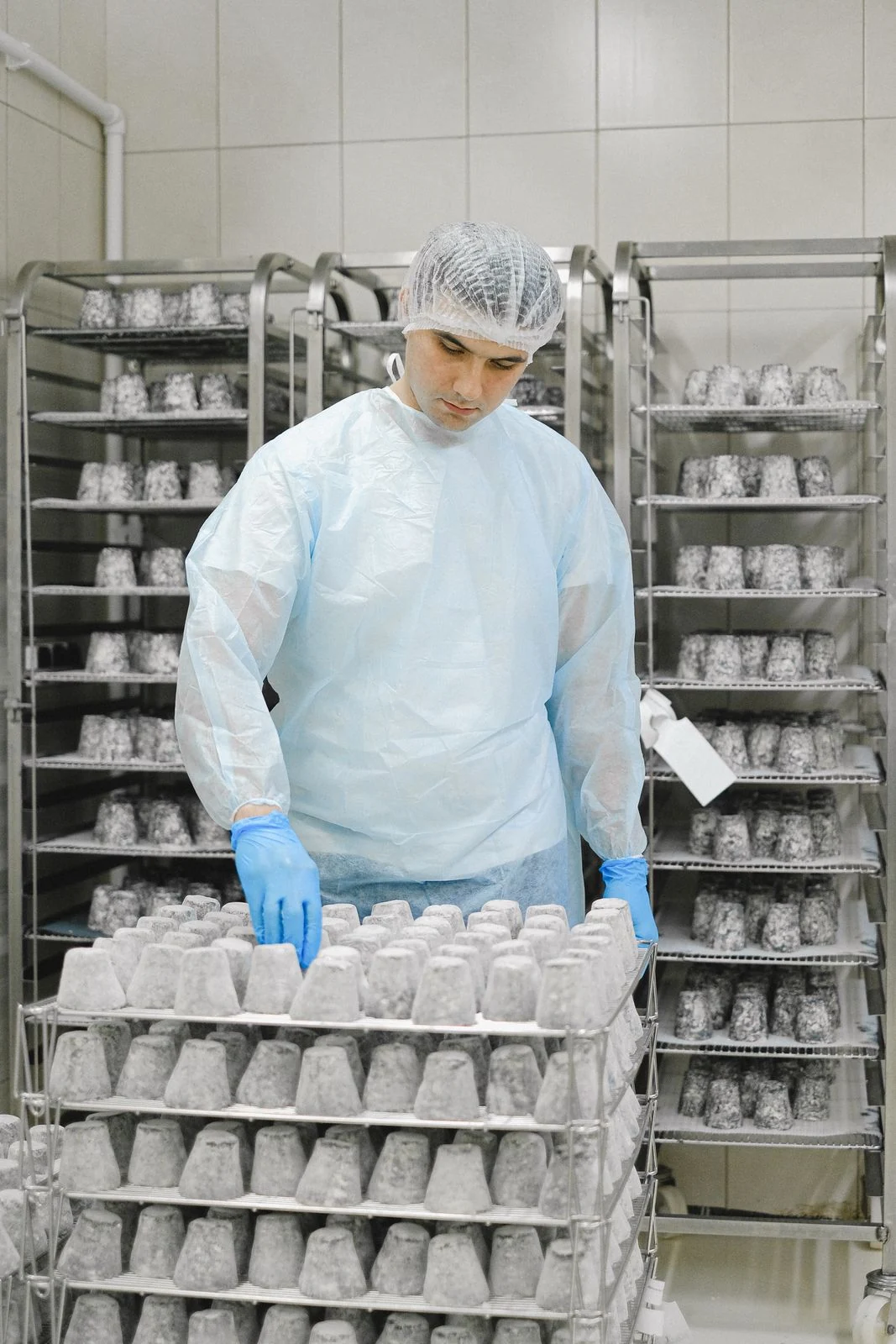 Brunei Halal Certification and Meat Controls
Brunei separates premises certificates, product-label permits and a tightly controlled halal-meat import route. This guide explains who decides, what is mandatory, and where public evidence stops.
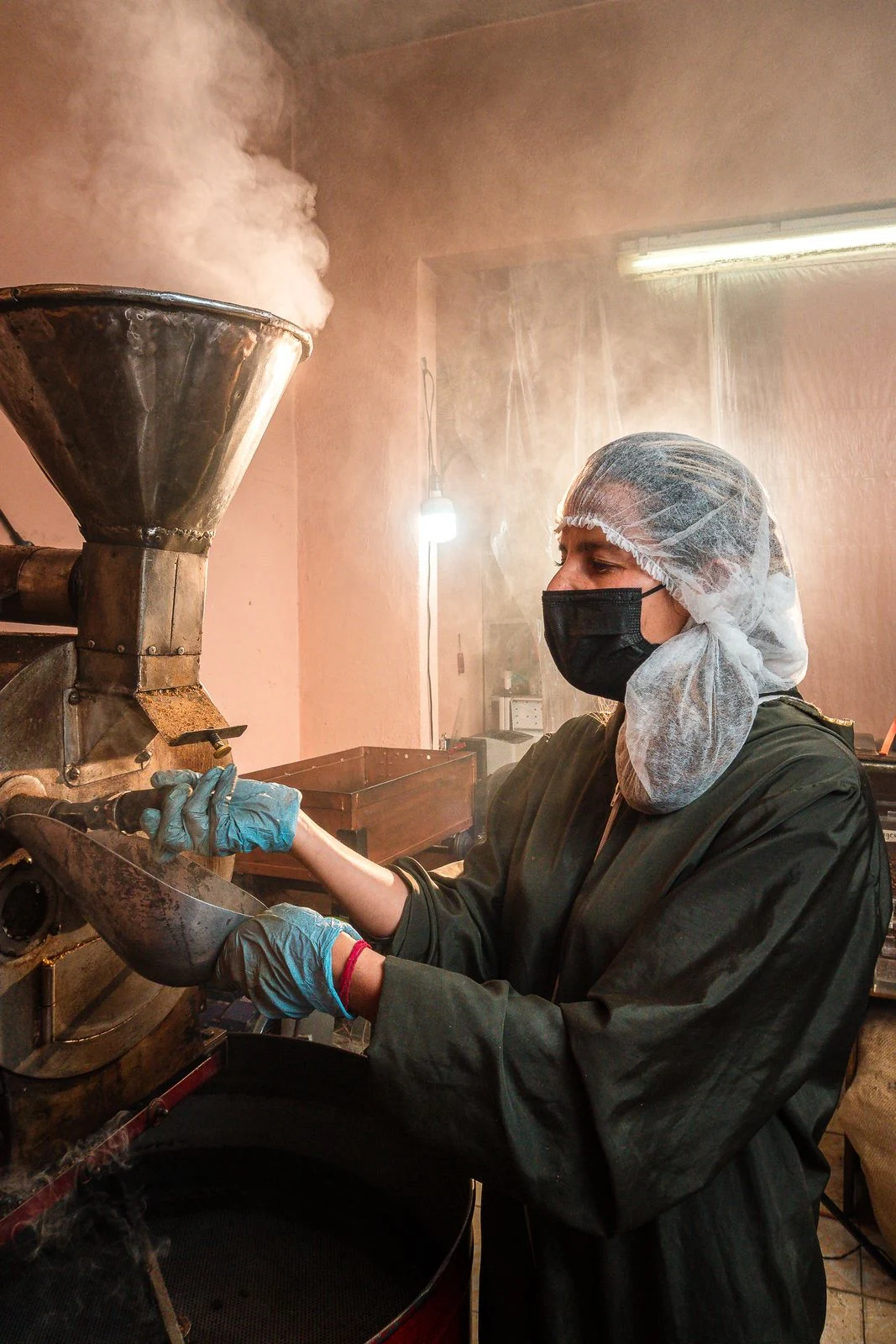 Halal Certification and Standards in Thailand
Thailand’s halal mark is product- and process-specific. Learn how CICOT, provincial committees, TAS 8400-2025, ingredient controls, slaughter rules and import recognition work in practice.
- Halal Certification Standards in Japan
Japan does not operate one national halal certification scheme. This guide explains how private certifiers, scheme-specific rules and destination-market recognition shape halal claims for food, meat, restaurants and exports.
- Saudi Arabia: Halal Certification Standards and Import Evidence
Saudi halal market access depends on the Saudi Halal Center’s recognised certification route, the product’s ingredients and claim, and consignment-level evidence—not simply a general halal logo.
- Halal Certification Standards in the United Arab Emirates
The UAE halal framework hinges on product-specific certification, a currently MoIAT-registered certification body and the applicable UAE technical rules. This guide separates mandatory slaughter rules from Gulf standards and jurisprudential context.
- Qatar Halal Certification Standards: Imports, Slaughter and Halal Claims
Qatar's halal controls are an MOPH import-compliance system: product category, approved foreign issuer, facility scope and shipment-linked evidence matter more than a logo alone.
- Kuwait Halal Certification and Import Standards
Kuwait’s halal controls are primarily an import-evidence system. Learn when a halal or halal-slaughter certificate is required, how PAFN’s interim recognition route works, and what the public rules do—and do not—say about alcohol and stunning.
- Bahrain Halal Certification and Food Standards
Bahrain’s national halal system places certification, accepted issuers and supply-chain evidence at the centre of a halal claim. This guide explains what is verified, what applies to imported meat, and where the paid standards leave technical questions for the designated certifier and MMAA.
- Halal Certification and Food Standards in Oman
Oman’s halal requirements are product- and evidence-specific. Meat has the clearest published certificate expectation, while imported food generally follows registration, safety, label and border controls. A new FSQC designation condition for required foreign halal certificates takes effect on 1 July 2027.
- Halal Certification Standards in Türkiye (Turkey)
Türkiye regulates the competence of halal certification bodies for the domestic market through HAK accreditation. This guide explains what that does—and does not—mean for foods, slaughter, alcohol, labels and exports.
- Pakistan Halal Certification Standards: PHA, PS:3733-2022 and Import Rules
Pakistan’s halal rules distinguish a halal claim from an ordinary product. Learn when PHA, PSQCA, PNAC, HCB certificates, lab evidence and import packaging rules apply—and where the public evidence stops.
- Halal Certification Standards in the United Kingdom
The UK regulates welfare, food safety and truthful food information, but has no single government halal standard. Learn what a certificate, slaughter method and certifier actually show.
- Halal Certification Standards in the United States
The United States has no single federal religious halal standard. Federal food and inspection law governs safety and truthful claims, while the halal criteria behind a logo usually come from the named private certifier. This guide explains the difference and the questions that matter for meat, ingredients, alcohol, shared equipment and exports.
Browse the Halal Standards · Read the assessment methodology · Submit documentary evidence or a correction